
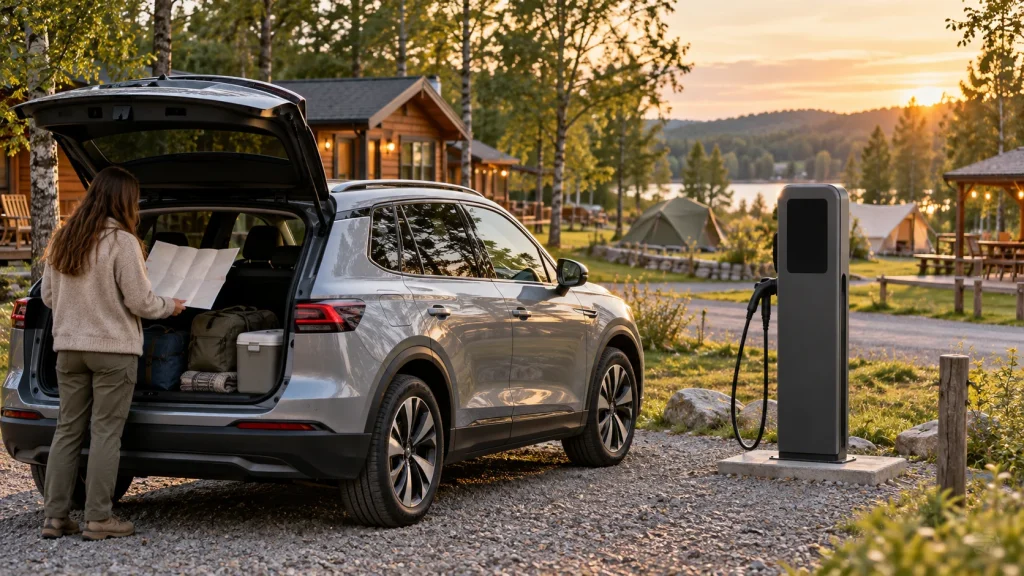
A charging point is out of order, occupied, or simply unavailable where you planned to stop. The immediate question is how far you can safely go before finding another one. When electric vehicle charging is unavailable, a few checks can help you make that decision without turning a delay into a stressful search.
Check what has actually happened
Start with the charger itself. A unit that appears unavailable in an app may be working when you arrive, while a unit marked available may be occupied or have a fault. Check its screen or status lights, and follow any instructions shown. If you have already tried to charge, make sure the connector is seated properly and that the session has started in the charger or payment app.
If a session fails, one careful retry may resolve a connection or payment issue. Try another connector or unit if one is available. Avoid repeatedly restarting a charger that displays a fault; look for an alternative instead. Where an operator’s contact details are displayed, reporting the problem may also clarify whether the fault affects one unit or the whole site.
Use your remaining range to choose the next stop
Check the vehicle’s battery level and estimated range before setting off. The range shown on the dashboard is an estimate, so leave room for changes in speed, weather, terrain, and heating or air conditioning use. A charger you can reach with some charge remaining is a better choice than one that requires the estimate to be exact.
Search your navigation system or charging app for several nearby options. Check whether each point suits your vehicle’s connector, whether it offers the charging speed you need, and whether you can access it at that time of day. Recent availability information is helpful, but it can change while you travel. If possible, choose an area with another charging option nearby.
For example, imagine that the charger at your overnight stop is occupied and your battery is too low for tomorrow’s planned sightseeing drive. A charging point on the route into town may be more useful than waiting without knowing when the current session will end. Check that you can reach it comfortably, then allow enough time for the charging stop in your plans.
If charging is unavailable at a campsite
Campsite electricity and vehicle charging serve different purposes. A socket intended for a camping pitch or cabin should not be treated as a substitute for an EV charging point. Connection rules vary by site, and the available supply may be intended for ordinary accommodation needs. Ask the campsite where vehicle charging is permitted and what options are available.
At the campsite, vehicles may not be charged directly from the electricity posts or cabins. The site has two charging stations outside the restaurant. Its information also points guests who need rapid charging to a nearby charging location, about seven minutes away. These details are useful when arranging a stay, but it still makes sense to check access and availability before relying on any particular charger.
If the site’s charging points are busy, ask whether there is a local procedure for using them, such as moving a vehicle once charging is complete. Plan your next drive around a confirmed charging opportunity if possible. A campsite stay often provides time to adjust the day’s schedule, but it does not make an unapproved power connection suitable for charging a car.
Reduce energy use while you reach another charger
If your battery level is tight, modest changes can help preserve range. Drive smoothly, keep to an appropriate steady speed, and avoid unnecessary detours. Use the car’s energy-saving settings if they suit the conditions. Reducing cabin heating or cooling may help, but comfort and clear windows still matter.
Set your destination to a charger in the vehicle’s navigation system if it offers EV route planning. Some vehicles prepare the battery before rapid charging, and the system may adjust its arrival estimate as you drive. Watch the estimate rather than assuming your departure range will remain accurate throughout the trip.
Do not push on toward a distant charger simply because it is faster. A slower charger you can reach comfortably may be the practical first stop. Once you have added enough energy, you can decide whether to continue to a rapid charger or resume your route.
Know when to stop and seek help
If there is no reachable charging point, stop somewhere safe before the battery runs out. Check the vehicle’s guidance and contact roadside assistance or your breakdown provider to discuss the available options. The appropriate response may depend on your location and the services they can provide; do not assume that a portable charge will be available.
If the car does stop, follow its instructions and prioritize your safety and that of passengers. Keep clear of traffic when it is safe to do so. Trying an improvised connection or extension cable is not a sound response to a low battery, especially when the property has not approved vehicle charging from that supply.
For more detailed information on this topic, read our guide on Select How to Choose the Right Caravan Pitch for a Comfortable Camping Stay.
Make the next interruption easier to handle
Before a longer journey, identify charging stops and a backup near each important stop. Check access hours and payment requirements, especially for a late arrival. At accommodation, confirm how EV charging works rather than assuming a cabin or pitch electricity connection includes it.
Charging can become unavailable with little warning, but the next step is usually straightforward: verify the problem, assess your usable range, and choose a reachable alternative with a margin to spare. If no such option exists, seek assistance from a safe location. A little flexibility in your route and overnight plans makes an unexpected charging gap easier to manage.