
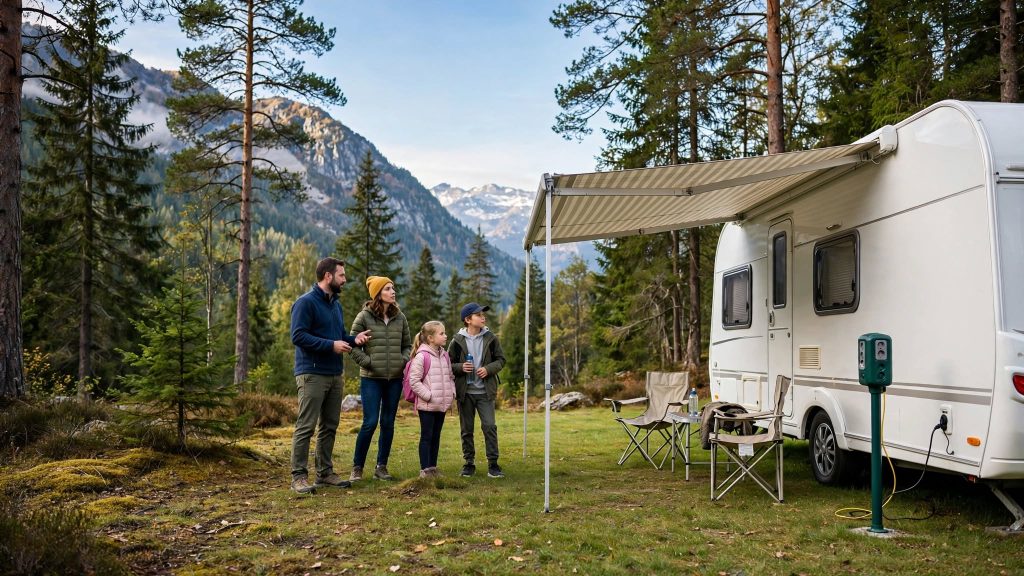
Choosing a campsite is only part of planning a caravan holiday. Once you arrive, the particular pitch you use can have a noticeable effect on comfort, convenience, privacy, and how easily you manage everyday tasks.
A caravan pitch that looks suitable on a campsite map may feel quite different once you consider the ground, nearby facilities, traffic, shade, drainage, and space for an awning. Taking a few practical details into account before settling in can make the entire camping stay easier.
Start With the Type of Caravan Pitch
Campsites may offer several pitch types, and the right choice depends on your caravan, equipment, and preferred camping style.
Grass Pitches
Grass pitches provide a traditional camping environment and can feel pleasant during dry weather. They are often comfortable for sitting outside and may suit families who want a softer area around the caravan.
The main consideration is ground condition. After prolonged rain, some grass pitches can become muddy or difficult to access, particularly for heavier caravans or towing vehicles. Check whether the ground feels firm enough before positioning your caravan.
Hardstanding Pitches
A hardstanding caravan pitch normally provides a firmer surface made from gravel, stone, or another durable material. This can make parking and manoeuvring easier when the ground is wet.
However, check the pitch dimensions carefully if you plan to use an awning. Some sites provide a separate grass section beside the hardstanding, while others expect the caravan and awning to fit within designated areas.
Look Closely at the Ground
A comfortable caravan setup starts with reasonably level and stable ground. Even a small slope can affect sleeping comfort and may require levelling equipment.
Before setting up, look for dips, soft patches, exposed roots, stones, and areas where water could collect. A pitch at the bottom of a noticeable slope may receive runoff during wet weather.
Drainage is especially worth considering when rain is expected. Firm, slightly elevated ground is generally easier to manage than a visibly low or waterlogged area.
Consider the Distance From Campsite Facilities
Being close to toilets, showers, water points, waste disposal areas, and other facilities can be convenient, but the closest pitch is not automatically the most comfortable one.
A pitch directly beside a toilet block, for example, may experience more foot traffic. Similarly, being next to a water point can be useful, but you may notice people regularly passing your caravan.
Think about your routine. Families with young children may appreciate shorter walks to essential facilities, while campers looking for a quieter stay may prefer a little more distance.
If you are still deciding what type of accommodation suits your trip, Cabin vs Camping: Which Holiday Option Fits Your Family? can also help put the practical differences between accommodation styles into perspective.
Check Sun, Shade, and Wind Exposure
The position of a caravan pitch can change how comfortable it feels throughout the day.
A sunny pitch may be welcome during cooler weather, but strong afternoon sun can make an awning or caravan warmer. Trees can provide useful shade, although pitches directly underneath them may collect leaves, twigs, sap, or dripping rainwater.
Wind exposure matters too. An open pitch on an exposed part of a campsite may experience stronger gusts than one protected by hedges or other natural features. If you use an awning, outdoor furniture, or a windbreak, this becomes particularly relevant.
Consider where the sun is likely to be during the hours when you expect to spend most of your time outside.
Make Sure the Pitch Has Enough Space
Do not judge a caravan pitch solely by whether the caravan itself fits. You may also need room for an awning, towing vehicle, outdoor chairs, storage equipment, and safe access around the unit.
Before booking, check the campsite’s rules about where vehicles and awnings can be positioned. Some sites have clearly defined pitch boundaries or spacing requirements.
It is also useful to think about the caravan door. A technically suitable pitch can become inconvenient if the entrance opens toward a hedge, busy path, or cramped section of the plot.
Check the Available Hookups
For longer stays, access to services can make daily camping more convenient. Depending on the campsite and pitch category, facilities may include an electric hookup, nearby drinking water, drainage, or other service connections.
Confirm what is actually included rather than assuming every pitch has the same facilities.
If using electricity, make sure your hookup cable can reach the designated connection point without creating an obstruction. Water collection and wastewater disposal are also easier when the relevant facilities are reasonably accessible.
Think About Noise and Campsite Traffic
Location within the campsite can matter just as much as the pitch surface.
Pitches near entrances, playgrounds, entertainment areas, reception buildings, internal roads, or communal facilities may experience more activity. That can be convenient if you want easy access to those areas, but less suitable if quiet evenings are important.
Look at the campsite layout before choosing. A pitch farther from busy areas may offer greater privacy, although it could mean longer walks to facilities.
The right balance depends on how you plan to use the campsite rather than simply choosing the most isolated or most central position.
Consider Access Before You Arrive
A spacious pitch is less useful if reaching it with your caravan is difficult. Check for narrow access roads, tight turns, steep gradients, low branches, or restricted manoeuvring space.
This is particularly important for larger caravans and longer towing combinations. If the campsite provides pitch dimensions or arrival instructions, review them before travelling.
When you arrive, inspect the pitch before unhitching. Deciding where the caravan, car, awning, and outdoor area will go can save unnecessary repositioning later.
Choose According to Your Camping Routine
There is no single caravan pitch that suits every camper. A family may prioritise easy access to toilets and play areas, while a couple planning a peaceful break may value privacy and distance from busy facilities.
For a short overnight stay, straightforward access might matter most. For a week-long holiday, shade, outdoor space, drainage, hookups, and the surrounding environment can become much more important.
Conclusion
Choosing the right caravan pitch involves more than finding an empty space large enough for your caravan. Ground condition, drainage, pitch size, access, sunlight, wind exposure, campsite traffic, facilities, and service connections all affect how practical the stay feels.
Checking these details before booking, and inspecting the pitch before setting up, helps you choose a location that matches your caravan and the way you actually plan to spend your holiday.