
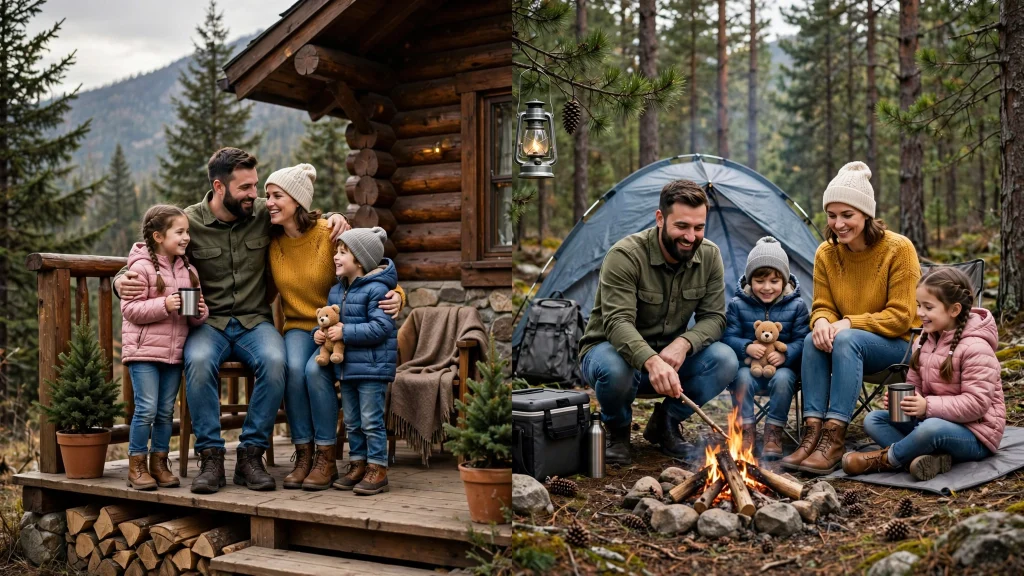
Choosing between Cabin vs Camping can shape your family’s entire vacation experience. Both options offer outdoor adventure, fresh air, and memorable moments, but they deliver different levels of comfort, cost, and convenience. Many families now seek nature-based holidays that balance relaxation with activities for children. Understanding the strengths and challenges of each option helps avoid disappointment. We will compare cabins and camping across budget, comfort, activities, safety, and overall value. This guide uses expert insights and practical experience to help your family make the right decision.
Family travel preferences continue to evolve as outdoor tourism grows worldwide. National parks, forests, and lakes attract millions of visitors each year because they provide affordable escapes from busy cities. When comparing Cabin vs Camping, the best choice depends on your family’s comfort level, travel goals, and experience with outdoor living. A thoughtful comparison ensures everyone enjoys the trip.
Understanding Cabin vs Camping
What Makes Each Holiday Unique?
The Cabin vs Camping debate starts with accommodation style. Cabins provide solid walls, beds, electricity, bathrooms, and weather protection. Many include kitchens, heating, and internet access. Families enjoy outdoor settings without sacrificing basic comforts.
Camping creates a closer connection with nature. Families sleep in tents or recreational vehicles while preparing meals outdoors. Campgrounds often include shared restrooms, picnic tables, and fire pits. Camping encourages teamwork, outdoor skills, and flexibility during every trip.
Key differences include:
- Cabins provide higher comfort and convenience.
- Camping offers stronger outdoor immersion.
- Cabins require less equipment.
- Camping usually costs less.
- Cabins work well during unpredictable weather.
- Camping builds outdoor confidence and practical skills.
Cost Comparison
Budget Matters for Every Family
Price plays a major role in Cabin vs Camping decisions. Tent camping remains one of the most affordable vacation choices. Families usually pay campground fees ranging from modest nightly rates to premium resort pricing. However, first-time campers must purchase tents, sleeping bags, cooking gear, and safety equipment.
Cabins generally cost more per night because they include furniture, utilities, kitchens, and private bathrooms. Luxury cabins may also feature hot tubs, fireplaces, and scenic lake or mountain views. Families traveling frequently may find that camping becomes more economical after the initial equipment investment.
| Factor | Cabin | Camping |
|---|---|---|
| Average nightly cost | Higher | Lower |
| Equipment required | Minimal | Extensive |
| Utility costs | Included | Usually unavailable |
| Meal preparation | Full kitchen | Portable cooking gear |
| Weather protection | Excellent | Limited |
| Long-term value | Comfortable | Budget-friendly |
Comfort and Convenience
Which Option Feels More Relaxing?
Comfort remains the biggest difference between Cabin vs Camping. Cabins provide climate control, comfortable beds, indoor plumbing, and secure shelter. Young children, older adults, and travelers with medical needs often appreciate these features during longer vacations.
Camping requires adapting to changing temperatures, uneven sleeping surfaces, and outdoor cooking. Experienced campers often enjoy these challenges because they create memorable adventures. Families new to outdoor travel may initially prefer cabins before gradually trying camping as their confidence grows.
Experts in outdoor recreation often recommend matching accommodations with your family’s experience level rather than choosing the least expensive option. Comfortable travelers usually participate in more outdoor activities and report greater vacation satisfaction.
Activities and Outdoor Experience
Nature Comes First
The biggest advantage of Cabin vs Camping is shared access to natural environments. Families can hike, fish, kayak, swim, watch wildlife, and enjoy campfires regardless of where they sleep. National parks and protected forests provide educational opportunities that children rarely experience in urban settings.
Camping often creates stronger engagement with nature because families spend nearly every hour outdoors. Cabin guests enjoy similar activities while having a comfortable indoor retreat after busy days. Parents with younger children frequently appreciate having a quiet place for naps, meals, and bedtime routines.
Outdoor educators consistently report that children who spend regular time in nature improve problem-solving skills, teamwork, and environmental awareness through hands-on experiences.
Safety and Practical Considerations
Planning Reduces Travel Risks
Safety deserves careful attention when comparing Cabin vs Camping. Cabins offer better protection from severe weather, wildlife, and temperature changes. Lockable doors, indoor storage, and reliable electricity also improve security during family vacations.
Camping requires greater preparation and awareness. Families should monitor weather forecasts, store food properly, carry first-aid supplies, and understand campground safety guidelines. Proper planning significantly reduces common outdoor risks while improving the overall experience.
Before choosing either option, consider these practical questions:
- How old are your children?
- What weather is expected?
- Does anyone have health concerns?
- How much outdoor experience does your family have?
- Will you need reliable internet or electricity?
- How many nights will you stay?
Choosing the Best Family Holiday
Match the Experience to Your Goals
The best answer to Cabin vs Camping depends on your family’s priorities. Cabins suit travelers seeking relaxation, comfort, and convenience without giving up beautiful outdoor scenery. They also reduce stress during unpredictable weather and simplify meal preparation.
Camping fits adventurous families who enjoy learning outdoor skills while minimizing vacation costs. It encourages independence, teamwork, and stronger connections with nature. Many experienced travelers eventually combine both options, camping during mild seasons and choosing cabins for colder or longer trips.
Families often discover that alternating between cabins and camping keeps vacations fresh while meeting changing needs as children grow older and gain outdoor confidence. Explore our latest insights on Fun Beach Activities for Kids During Camping Trips.
Conclusion
The Cabin vs Camping decision has no universal winner. Cabins deliver comfort, convenience, and reliable shelter, while camping offers affordability and a deeper outdoor experience. By considering your family’s budget, comfort needs, and adventure level, you can confidently choose the holiday option that creates lasting memories together.